By Rajveer Singh, Head Of Khalsa Diary, Funding and Conflict None
Bhai Sukha Singh belonged to the village Mari Kamboki, and Bhai Mehtab Singh belonged to the village Meeran Kott, both in the district of Amritsar. These two brave saint soldiers are famous for their daring deed of cutting the head of an evil man, Massa Rangar, who was desecrating the Golden Temple in 1740.
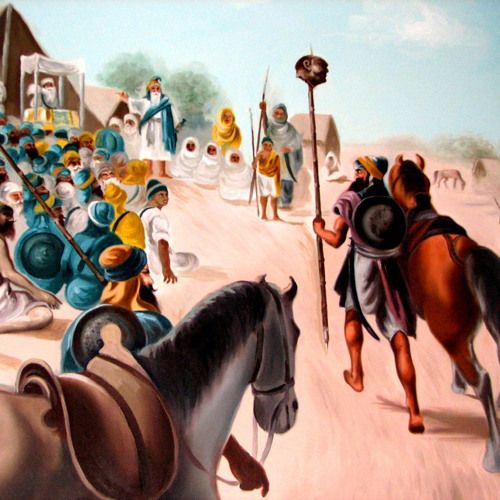
Zakaria Khan, irritated by the Sikhs’ resistance and his failure to subdue them, obtained the orders from Nadar Shah Durrani to annihilate the Sikhs from Punjab. Accordingly, it was advertised that if a person helps to catch or kill a Sikh, he would be rewarded handsomely. To steal and rob from Sikhs was made legal.
These orders of the government motivated many greedy people to become traitors. Cart-loads of severed heads of the Sikhs were sent to Lahore by such people to win government rewards. The rewards were so enticing that some would even kill and decapitate their own daughters, and say that they had killed a young Sikh boy. These traitors included Harbhagat Niranjania Chowdhary (a petty village official) of Majitha, Chowdhary of Noshaira Pannu, and Chowdhary Massa Rangar of Mandiali. Of all these men, Massa was the most notorious and in charge of the Amritsar circle. Within a few months, barely any Sikhs were left in Panjab, as many had left the terror to regroup in the jungles. However, Massa Rangar was still not satisfied. Instead he took a large force on the orders of Zakhirya Khan and attacked Darbar Sahib. He desecrated Darbar Sahib by smoking and drinking inside there while watching dancing girls. Armed watchmen were posted around for his safety.
Bhai Balaka Singh thought it best to approach Bhai Mehtab Singh who was in Bikaner, so that some sort of movement could start again. When the ordeal was narrated to Bhai Mehtab Singh both him and Bhai Sukha Singh decided to go to Amritsar and stop the desecration.
They did ardas in front of the Khalsa Panth, and said:
ਮਰਨੇ ਤੇ ਕਯਾ ਡਰਪਨਾ, ਲੇ ਪਾਹੁਲ ਖੰਡੇ ਧਾਰ।
ਜਬ ਹਾਥ ਸਿਧੌਰਾ ਲੈ ਤੁਰੇ, ਮਰਨੋਂ ਡਰੇ ਨ ਨਾਰ।।੨੭।।Fear of death is incompatible with taking the Pahul of the Double Edged Sword, Fear of dying runs away when you hold the reins in your own hands.
Sri Gur Panth Parkash – Translation By Gurtej Singh
When they reached the gates of the city, they obtained baked-clay pots and broke them into small pieces. The broken clay pieces were rounded to look like coins of those days. The “coins” were put in small bags, and the Sikhs, dressed as village land revenue collectors, were ready to perform their task.
During those days, collectors would obtain revenue from the people of the villages in their charge and deposit the money with the local administrator who would send the collections to Lahore. The land revenue was paid in the form of coins of different values.
When the Sikhs reached the Golden Temple they passed by the watchmen without anyone even lifting a finger against them. The watchmen assumed by seeing the “coin bags” that the two village collectors were going to the Chowdhary for depositing their money. When the Sikhs got inside the Harimandar Sahib the bags were put before Massa, who was drunk and watching the dances of the girls. When he bent to feel the “coins” in the bags, a sword fell like lightning and cut off his head which was picked up by the Sikhs.
Bhai Rattan Singh Bhangu writes:
ਦੋਊ ਸਿੰਘ ਤਹਿ ਜਾ ਪੁਜੇ, ਜਹਿ ਬਾਜੈ ਮਿਰਦੰਗ।
ਕੱਢ ਸਿਰੋਈ ਸਿਰ ਦਈ, ਮੱਸੇ ਕੇ ਨਿਰਸੰਗ।।੩੭।।Both Singhs eventually reached where the drum was being sounded. A Sirohi (Rajasthani Sword) was spontaneously pulled out, and a blow cleaved through Massa’s neck.
Sri Gur Panth Parkash – Translation By Gurtej Singh
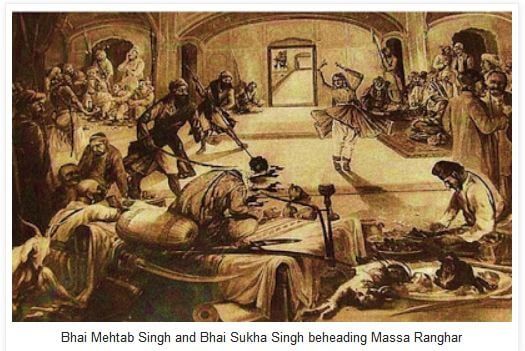
Before the people inside or outside the Temple could compose themselves and know what had happened, the Sikhs on their horses had vanished. The job was performed so successfully that it brought great shame to the administration and the police of Amritsar.
 Khalsa Diary