Part 1 of a historical review by Dr. Jagroop Singh, student of Sikh Studies without funding or conflict of interest
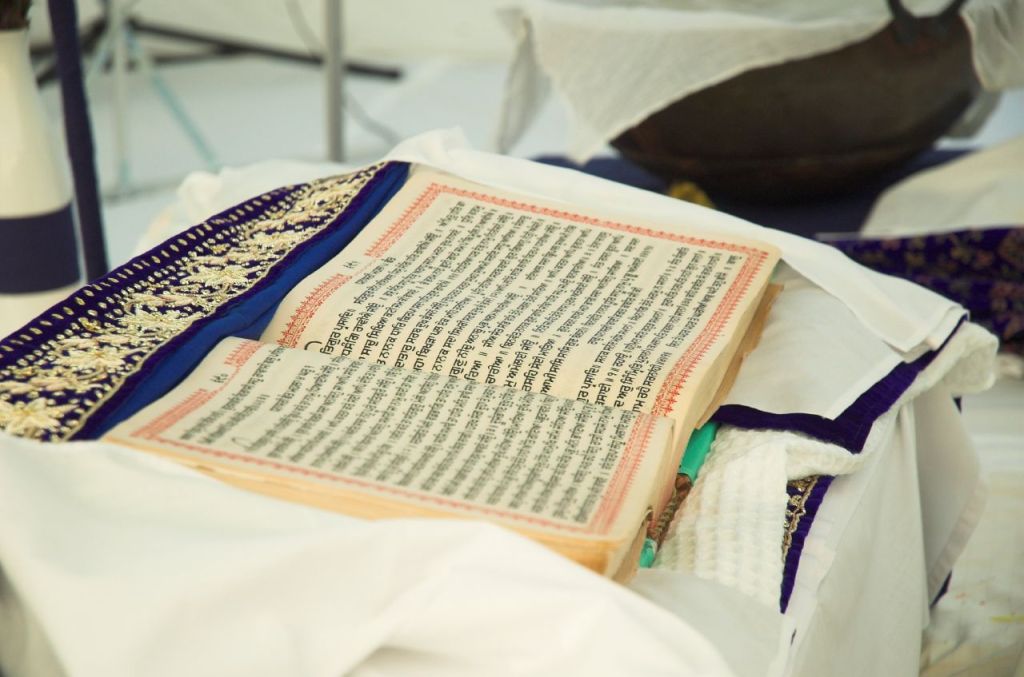
Religious persecution is not new phenomenon and involves many different causes and forms. The ideological difference between Sikhism and the practice of Hinduism has been the basis of ongoing tension and ill will from the times of Guru Nanak. Sikh history is littered with negativity from the elite Brahmanical class in view of the philosophical incompatibility of the living Guru Granth Sahib Ji (Supreme Court verdict) and that of the Manusimriti code. Pursuance of a Manusimriti based Hindu Rashtar in modern times has necessitated some “bold schemes of social, religious and political reconstruction”. Furthermore, the dual policy of either ‘elimination or assimilation’ of the Sikh tradition has roots to the sacrilege of Guru Granth Sahib in recent times. The ‘behind the scenes’ attacks of desecration have become increasingly audacious, signifying a malicious and organized operation. Socio-political commentators are voicing concerns of a conspiracy, consistent only with Hindutva. Evidence based analysis and active surveillance is required in order to develop robust defensive and preventative measures (Gazi, Parmjit Singh). This article aims to explore the historical roots of this ideological conflict and the political motivations resulting in such outrageous and offensive acts.
The concept of ‘Atmak Jot’ transference through the ten successive Gurus, over a period of 239 years is unparalleled in history. The ‘Miri Piri’ conceptual framework of Guru Hargobind Sahib Ji was a part of the evolutionary process in the ordination of the Khalsa Panth in 1699. Smaller Hindu principalities combined with the Mughal Empire consistently attacked the fort of Anandpur Sahib. The gigantic campaign to eliminate the Sikhs during “Safar-e-Shahadat” also ultimately failed. The emphatic success of Banda Singh Bahadur (1710-1716) and the 40 years on the throne by the acclaimed Maharaja Ranjit Singh (BBC historical survey) fulfilled the promise of “Raj karega Khalsa”. It gave the ultimate legitimacy to political philosophy of a Sikh Raj (rule).
The overarching achievement of equality, liberation and freedom of the Punjab was soon to be brought down by the connivance of corrupt Hindu officials within the Sikh empire and the East India Company. A century of British rule only succeeded on a ‘divide and rule’ policy rewarding ‘puppets’ with status and monetary gain. The entire sub region was thoroughly exploited, subjugating the population to a pitiful existence. Unfortunately, that exploitation and subjugation has continued for majority of people into the post independent era.
It was inevitable that the Brahmins would lead the way in shaping future political class given their preparedness to mould and adapt as required. The upper class Hindus readily took over the British mantle. The Muslims were seen as undesirable ‘outsiders’ or ‘recent’ Hindu converts in need of ‘conversion therapy’. The Christians were the ‘residue’ of the British missionaries, prevalent amongst the lower castes making them suitable targets for prejudice and discrimination. Sikhs, Jains and Buddhist were to be classed as Hindus and their ‘inclusion’, cleverly enshrined within the Indian constitution. In order to realize their vision of a Hindu Rashtar, historians and theologians were instructed to revise and reconstruct a grandiose version of Hinduism. The bruised and wounded psychology of the Hindu masses under the Muslim rulers during the past thousand years was in dire need of a reconstructive ‘make over’. Guru Nanak, on the other hand, founded of a new, separate & unique religion of Sikhs. He was the first person to ‘stand up’ to the Mughal invasion and their unjust rule (1506) as enshrined in the ‘Babur Bani”. Therefore, any attempts to incorporate Sikhism, as a sect within the fold of Hinduism is factually illogical and extremely offensive.
Mahadeo Govind Ranade (High Court Judge and a social reformer) responded to the Hindu nationalist’s challenge in writing a glorified narrative depicting Shivaji as the great warrior and even, incarnation of Lord Shiva. This refashioned and glorified narrative was unsupported by any academic references thus affecting its authenticity and credibility. Chhatrapati Shivaji (1630-80) certainly organized a loose confederacy network as a base for the Maratha Empire in the central belt of India during 1674-1680. Yet, despite Shivaji’s success the Brahmins refused to ordain him as a king until he proved his Kshatriya descent attested by the Adilshahi governance system. He had to go through all sorts of rituals, including the thread ceremony and marrying his own wives again. However, some describe Shivaji as a local but a highly successful local chieftain without evidence of Hindu revivalism. Mandirs in neighbouring areas were regularly ransacked with desecration of their deities. He wasn’t always successful in ‘prizing away’ Hindu officials &/or soldiers serving the Islamic rulers and fighting against his kingdom. According to Dr. K. R. Kanugo, the benevolence factor in the Maratha Empire is somewhat overstated, given the significant bias against Muslims and the continued practice of caste prejudice by Brahmins.
Ranade was able to indulge his imagination to construct a whimsical version of history without the usual academic scrutiny. This task was enabled by his professional status and the support of powerful people. It is reasonable to test the hypothetical status of Shivaji by questioning the need of the Kashmiri Brahmins approaching Guru Teg Bahadur Ji at Anandpur Sahib (1675). Surely, Shivaji as the great national hero would have been the obvious choice? Guru Teg Bahadur Ji and his companions sacrificed their lives, for the purpose of upholding the principle of religious freedom?
Rabindranath Tagore, the renowned Bengali poet, promoted Ranade’s work and further developed an aura of socio-religious and cultural supremacy of Shivaji. This had the desired result of people treating him as an idol and, even putting him on the pedestal of a god like figure? Tagore’s motivation for venturing into the Sikh theology and history was heavily tainted by his Hindu religious faith and these are fundamentally irreconcilable (Singh, Ajmer). The spirit of Guru Nanak and Bhagat Kabir’s philosophy seem to fit into his Tagore’s interpretive framework but only to produce a distorted result. A particularly scathing article was published in the Modern Review, Calcutta (April, 1911) on the subject of the “Rise and fall of Sikh Power”. Unfortunately, his comparative analysis only went on to mediocritize the Sikh Gurus and their mission. In Adam Curtis’s (BBC journalist) way of looking, the promotion of Shivaji above and beyond the Sikh Gurus can be seen as the beginning of a modern conspiracy.
The following comments are reasonable observations: –
1. Neither Tagore or Ranade has any academic credentials in the field of history and are co-dependent on each others work
2. The article reflects a personal viewpoint rather than an objective analysis
The article is unbalanced in emphasizing the fall of Sikh power and, in contrast, positivity and glorification of the Marathas
3. Despite numerous factual inaccuracies, the article is accepted as noble piece of work by the Bengali ‘intelligencia’
4. The political elite headed by Gandhi and Nehru soon became enthusiastic ‘cheer leaders’. It begs the question, as to who was the instigator and who was the follower?
5. Tagore was allied to the British administration for a peaceful and partisan succession, in stark contrast of the Punjabi/Sikh armed struggle. He wrote the famous poem, “Jun Gun Mun” in praise of George V, which later to became the national anthem of India
6. Tagore expressed many negative and derogatory comments upon Sikh religion
Expressing philosophical difference between the various Gurus
7. The creation of Khalsa in 1699 was a departure from the spiritual realm
Guru Gobind Singh Ji’s zealot pursuit was to annihilate the opposition for domination all others for personal gain and control
8. Guru Gobind Singh Ji’s decision to ordain the Guru Granth Sahib Ji without a human successor as a ‘backward step’. The Guru Granth and Guru Panth on equal footing, in his opinion, was a step towards confusion and downward trajectory. It is likely that such commentary augmented the emergence of the “human Gurudom”
In summary, the Bengal ‘illuminati’ became the dominant source of information on Sikhs for the British rulers. The partnership, were able to develop a joint policy to control the masses and ensure a smooth transition of power into their hands. During this time, the seeds of Hindu nationalism had been sown with the facade of secularism. This modus operandi has continued to prevail into the modern India of today. It requires significant untangling of the complex web of history to fathom out the ‘cause and effect’ theory. Reflecting on the loss of life by freedom fighters in achieving independence, they are now considered collateral damage. They are not completely forgotten, as their distorted narratives of are brought to ‘life’ for political convenience to maneuver public perception &/or opinion. Recent depictions of Shaheeds Kartar Singh Sarabha, Bhagat Singh and Udham Singh are cases are worthy of critical appraisal.
Reference
Gazi, Parmjeet Singh (2021) Beadbi article in Punjabi (Sikh Siyasat News website)
https://www.sikhsiyasat.info/article-by-parmjeet-singh-gazi-5/
Ranade, Mahadeo Govind (1900) Rise of the Maratha Power (originally published in 1900, reprinted 1961 and now available in digitized format)
https://www.forgottenbooks.com/en/books/RiseoftheMarathaPower_10086911
Singh, Ajmer (2017) Kis Bidh Ruli Patshahi translated Withering of Sovereignty (Singh Brothers, Amritsar)
Singh, Gurtej (2011) Singh Naad ( ISBN 81-7205-266-9)
 Khalsa Diary