Article by Rajveer Singh, Head Of Khalsa Diary, funding and conflict none
Many people associate happiness, love, and the celebration of a timeless bond being formed when it comes to weddings. But, when it comes to Sikh weddings, we have created disillusion as to what the Anand Karaj means and its significance.
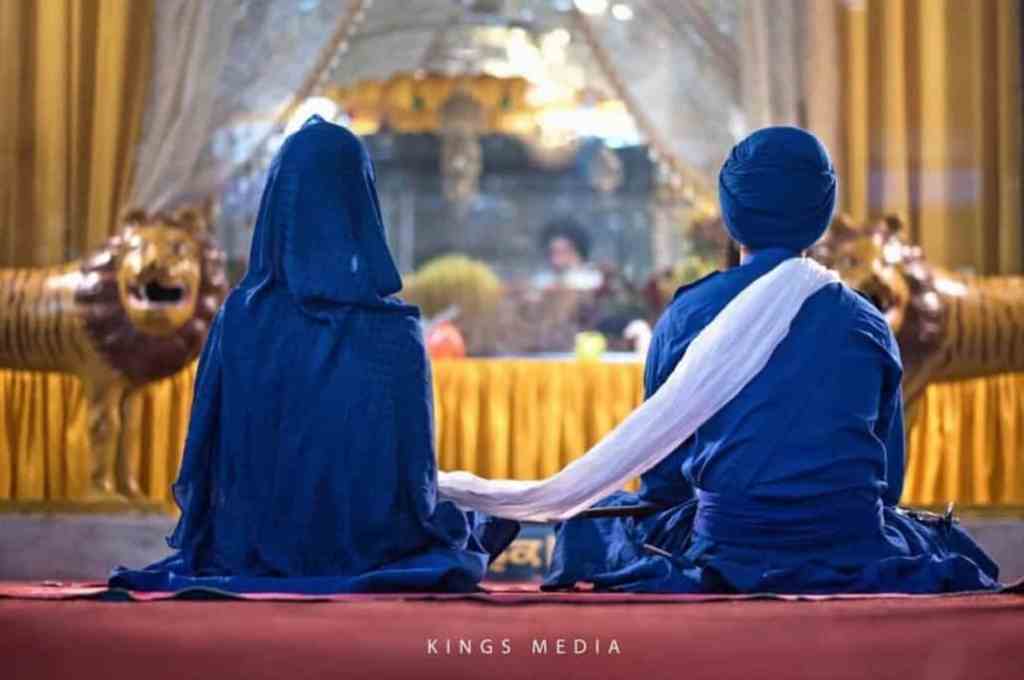
It’s pretty unfortunate that since the fall of the Sarkar-E-Khalsa, we have moved further and further away from our Sikh values and have adopted pointless rituals, bogus entertainment as the priority. Still, when it comes to the actual Anand Karaj ceremony, it is merely taken as a formality or has been edited to “something that looks pretty and makes a good wedding film.”
An article published in 2017 was recently brought to my attention, and I found out that this was also sent to many young Sikhs via social media during national marriage week, titled ‘A Guide to Sikh Wedding Rituals, Customs and Traditions’.
This article is highly inaccurate and insensitive to the actual Sikh Anand Karaj or, as mentioned in our Sikh Code of Conduct (Rehat Maryada), the Anand Sanskar. From pages 34-37, the Sikh Code of Conduct discusses Anand Sanskar. The Sikhs have four main ceremonies that they will go through in their lives:
- Naam Sanskar – Naming a newborn child through a Hukamnama.
- Amrit Sanskar – Taking Amrit and becoming part of the Khalsa Panth
- Anand Sanskar – joining in matrimony and growing closer to Akaal Purakh with your partner
- Antam Sanskar – Funeral service
Now I will be clear here that the Sikh code of conduct is not just for Amritdharis but also for anyone who considers themselves Sikh. Therefore the guidance provided is warranted and should be followed through.
The most important thing to understand here is that the Anand Karaj can only be done between Sikhs. That means the ceremony itself can not be performed if either the bride or groom is not Sikh. Moreover, on page 37, it explicitly says that:
“Persons professing faiths other than the Sikh faith cannot be joined in wedlock by the Anand Karaj ceremony”.
And whilst people may debate that other religions don’t have a problem with this, you should know that a bride or groom should be baptised as a Catholic first as per Catholic traditions. In Islam, a bride or groom is converted before taking part in a Nikah. Even in some Buddhist clans in Japan, a bride or groom who is not Buddhist will be denied entry to the temple until they accept Buddhism. So interfaith marriages can be done in court marriage, but an actual Anand Karaj is not possible and should not be allowed at all costs unless the non-Sikh partner is willing to take Amrit and enter the Panth.
Similarly, as per the 52 Hukams of Guru Gobind Singh Ji;
ਭਾਦਨੀ (ਸਿਰ ਮੁੰਨੇ) ਨੂੰ ਕੰਨ੍ਯਾ ਨਹੀਂ ਦੇਵਨੀ, ਉਸ ਘਰ ਦੇਵਨੀ ਜਿਥੇ ਅਕਾਲ ਪੁਰਖ ਦੀ ਸਿੱਖੀ ਹੋਵੇ
Do not give your daughter to a clean-shaven man; give her to a home where Akaal Purakh’s Sikhi is practised.
Now, the idea is not to force women to marry a Sikh as some radicals might lead you to believe. If anything, this is a message to males to improve themselves and live out their lives as part of the Panth.
Next, I will go through some of the ceremonies practised and discuss their origins or how they are meant to be done.
Once a suitable partner is found, the next step should be your engagement if you choose to do so. You should never ask the partner for their caste during the process, as it is irrelevant in Sikhi. Guru Granth Sahib Ji is very strict on this matter on several occasions:
ਜਾਤਿ ਕਾ ਗਰਬੁ ਨ ਕਰਿ ਮੂਰਖ ਗਵਾਰਾ ॥
jaat ka garab na kar moorakh gavaaraa ||
Do not be proud of your social class and status, you ignorant fool!
ਇਸੁ ਗਰਬ ਤੇ ਚਲਹਿ ਬਹੁਤੁ ਵਿਕਾਰਾ ॥੧॥ ਰਹਾਉ ॥
eis garab te chaleh bahut vikaaraa ||1|| rahaau ||
So much sin and corruption comes from this pride. ||1||Pause||
The Kurmai or the engagement as per Sikh traditions does not include a ring or dried dates etc. So the engagement is entirely optional. This, along with many other ceremonies, is influenced by Westerism and Hinduvata. So if you partake in an engagement, what should you do? The engagement should occur in front of Guru Granth Sahib Ji, and an ardas should also be done. As per Sikh Rehat Maryada the “A Kirpan, a steel bangle (kara) and some sweets may be tendered to the boy.” If you’re still following, once again, there is an incentive to the Sikhs to take Amrit and become part of the Panth here.
Now the several ceremonies that are mentioned after the engagement are totally irrelevant to the Sikh faith.
- Chunni Chaddai – originated from the Rajputs and has nothing to do with Sikhi. As a Sikh, you should cover your hair at all times, yet many people choose not to in this “modern world”. There is no point in wearing a chunni once in your life for a pointless ritual. And when it comes to the idea of protecting honour well in the Sikh faith, women can protect their own honour and do so with the same kirpan that a man is given when they take Amrit.
- Choosing the day – should not be done through Brahmanical horoscopes; all of these are false and are challenged by Gurbani. “Any day found suitable by both parties should be fixed”, as per Sikh Rehat Maryada.
- Cards – should not contain Gurbani as they are usually thrown out afterwards. Also, if there are mentions of cocktail parties or other events against Gurmat, Gurbani should not be added.
- Mehndi and Choora – both of these originate from Hindu and Muslim traditions. They have absolutely nothing to with Sikhism and are merely ritualistic ideas. The Choora ceremony is symbolic of slavery as wearing it is impractical, and it weighs you down very similar to how slaves used to be kept.
- Maiya, Gana and Vatna – all three of these originate from the Hindu tradition. Maiya being that the bride and groom should not leave home before marriage, is insignificant in these “modern times” where both parties will more than likely be at work. Gana is tying threads to ward off evil spirits, baseless superstitions that do not contain any meaning in the Sikh religion. Finally, Vatna rubbing turmeric paste on the bride or groom is again something that can be considered a skin care treatment but does not hold any value.
- Kalgi – Khalsa does not wear a Kalgi as it is an imitation of our Gurus, and no one can be like them. Even the Sikh Jathedars and Kings throughout history did not wear a Kalgi as a sign of respect that the only true king is Guru Gobind Singh Ji Maharaj.
- Surma – eyeliner in your eyes is both a Hindu and Celtic tradition, and in both beliefs, it symbolises good luck and new beginnings. However, a Sikh of the Guru does not need good luck, and they don’t need to worry about new beginnings as they expect everything as the Guru’s will.
- Wearing Red – Red is not one of the Sikh Kaums colours; it is the colour of Brahmins and Rajputs. On the day of one of our main ceremonies, we should try to dress appropriately.
- Sehra – originated from the Mughal era in India. When the Rajputs and other princely state rulers would sell their daughters to the Mughals for marriage, the Mughal leaders, who were primarily old, would cover their faces in a Sehra to prevent them from seeing their faces. Again, nothing to do with Sikhi. Sikh Rehat Maryada clearly states;
“Putting on floral or gilded face ornamentation, decorative headgear or red thread band round the wrist, worshipping of ancestors, dipping feet in milk mixed with water, cutting a berry or jandi (Prosopis spicigera) bushes, filling pitcher, ceremony of retirement in feigned displeasure, reciting couplets, performing havana (Sacrificial fire), installing vedi (a wooden canopy or pavilion under which Hindu marriages are performed), prostitutes’ dances, drinking liquor, are all sacrileges.”
Sikh Rehat Maryada
So the majority of these ceremonies are useless, foolish and irrelevant to the Sikh religion. So what should happen on the day of a Sikh wedding or an Anand Karaj? First off, the groom’s side should consult the bride’s side and ask how many people they can afford to accommodate, and only that amount should attend. Then, they should enter the Gurdwara premises, do kirtan, and meet with their bride’s side with Gurfateh.
Next, they should proceed to the Darbar Hall, where the bride sits on the left, and the groom sits on the right in front of Guru Granth Sahib Ji. The Granthi Singh will then proceed with the Anand Karaj ceremony, singing Lavaan kirtan and explaining the meanings and responsibility a husband has to his wife and vice-versa and how they should grow together according to Guru Granth Sahib Ji.
After the Anand Karaj is complete, the collective parties should then have langar at the gurdwara instead of attending a hall and having an afterparty which costs stupid amounts of money for absolutely no reason. There is no reason to have an Anand Karaj wearing a Dastar and holding a Kirpan, only to go and take it off in the next 20 minutes, start drinking and serving meat, etc. The 4 Lavaan each discuss spiritual growth, which will help you grow as a person and as a couple. Therefore this day should be kept as a religious day as it is one of our Sanskars.
The Sikh Rehat Maryada even says that if one of the partners is Amritdhari and the other isn’t, then the partner should also take Amrit before their Anand Karaj. This isn’t unusual, as discussed previously, as other religions also require a similar commitment. If you ask your grandparents, they will also witness the fact that many of these ceremonies were not done when they were married, and many of them would have taken Amrit around the same time as well.
Whilst Sikhi warrants having fun; it does not accept laxity in any sort of way. Taking part in a religious ceremony is not a formality; it’s a solemn vow. Those who follow the religion will understand the disrespect we feel when we see articles such as this and so-called “Sikh weddings” carried out in this manner. If you can not respect these values or are too arrogant to accept them, don’t take part in an Anand Karaj ceremony. You need to spend more time cleaning shoes in the Gurdwara to understand how vital Gurbani is, Sikhi and its values are.
 Khalsa Diary